Low AMH and Natural Fertility: What You Can Do Right Now
You get a blood test result back and three letters change everything: AMH. Low AMH. And suddenly you are being told your ovarian reserve is diminished, your window is closing, and IVF may be your best option.
It is a frightening moment. And it is also, in many cases, a misunderstood one.
Low AMH does not mean you cannot conceive naturally. It does not mean your eggs are poor quality. It does not mean IVF will work better than your own body given the right support. What it means is more specific and more hopeful than the conversation in your doctor's office probably suggested.
This article explains what AMH actually measures, where its limits are, and what natural fertility treatment for low AMH looks like in practice.
What AMH Actually Tells You and What It Does Not
AMH stands for anti-Müllerian hormone. It is produced by the small follicles in your ovaries and gives an indication of how many eggs remain in your ovarian reserve. It is used as a marker because it is easy to measure from a blood sample and does not fluctuate much across the menstrual cycle.
What it does not measure is egg quality.
This is the distinction that changes everything. A woman with low AMH may have fewer eggs remaining, but the eggs she has can be perfectly healthy. Egg quality, not quantity, is the primary driver of natural conception and successful IVF outcomes. Two women with identical AMH scores can have vastly different fertility prospects depending on their age, lifestyle, stress levels, nutrition, and overall systemic health.
AMH also does not predict your ability to conceive naturally in a given month. It reflects the pool of eggs remaining over your lifetime, not whether this cycle's egg will fertilise and implant successfully.
Women with low AMH conceive naturally. This is documented. The question is what conditions give those conceptions the best possible chance.
Why Low AMH Is Not the Whole Story
The fertility industry has a complicated relationship with AMH. It is a useful tool for IVF clinics, because it helps predict how many eggs will be retrieved during a stimulated cycle. This means AMH is central to IVF planning conversations, and that framing shapes how it is presented to patients.
For natural conception, AMH is far less predictive than IVF clinics imply.
A large study published in the journal Human Reproduction followed over 750 women aged 30 to 44 who were trying to conceive naturally. Women with low AMH were no less likely to conceive within a year than women with normal or high AMH in the same age group. The study concluded that AMH was not a useful predictor of natural conception for women who had not yet been trying long enough to meet clinical infertility criteria.
What actually predicts natural conception? Egg quality. Uterine environment. Hormonal balance across the whole cycle. The health of sperm. And the broader systemic conditions, inflammation, stress, nutrition, and cellular health, that either support or undermine the process.
These are things you can work with.
What Affects Egg Quality and How to Support It Naturally
Egg quality is influenced by mitochondrial function. Mitochondria are the energy-producing structures inside every cell, and they are particularly important in eggs because fertilisation and early cell division demand enormous amounts of energy. When mitochondrial function is compromised, egg quality suffers.
The factors that damage mitochondrial function include oxidative stress, chronic inflammation, poor nutrition, environmental toxins, and age-related cellular decline. The good news is that most of these are addressable.
CoQ10 and Mitochondrial Support
Coenzyme Q10 is one of the most well-supported supplements for egg quality. It acts as an antioxidant within the mitochondria and supports energy production in the egg. Studies in older mice showed that high-dose CoQ10 reversed age-related declines in egg quality, and human studies are increasingly supportive of its role in fertility.
The form matters. Ubiquinol, the active form of CoQ10, is better absorbed than ubiquinone, particularly in women over 35. A typical starting dose is 400 to 600mg per day, though some specialists recommend higher doses for women with low AMH or poor IVF outcomes.
Anti-Inflammatory Nutrition
Systemic inflammation damages egg quality directly. An anti-inflammatory diet, built around whole foods, healthy fats, colourful vegetables, and minimal processed sugar and alcohol, reduces the oxidative load on developing follicles.
Key nutrients for egg quality include folate (or methylfolate if you have the MTHFR gene variant), vitamin D, omega-3 fatty acids, zinc, and selenium. These are not optional extras. They are structural requirements for healthy eggs.
Reducing Toxic Load
Environmental oestrogens, found in plastics, certain cosmetics, pesticides, and non-stick cookware, can disrupt hormonal signalling and are associated with reduced ovarian reserve. Reducing exposure is not about being perfect. It is about reducing the overall burden on your hormonal system.
How Kambo Supports Natural Fertility With Low AMH
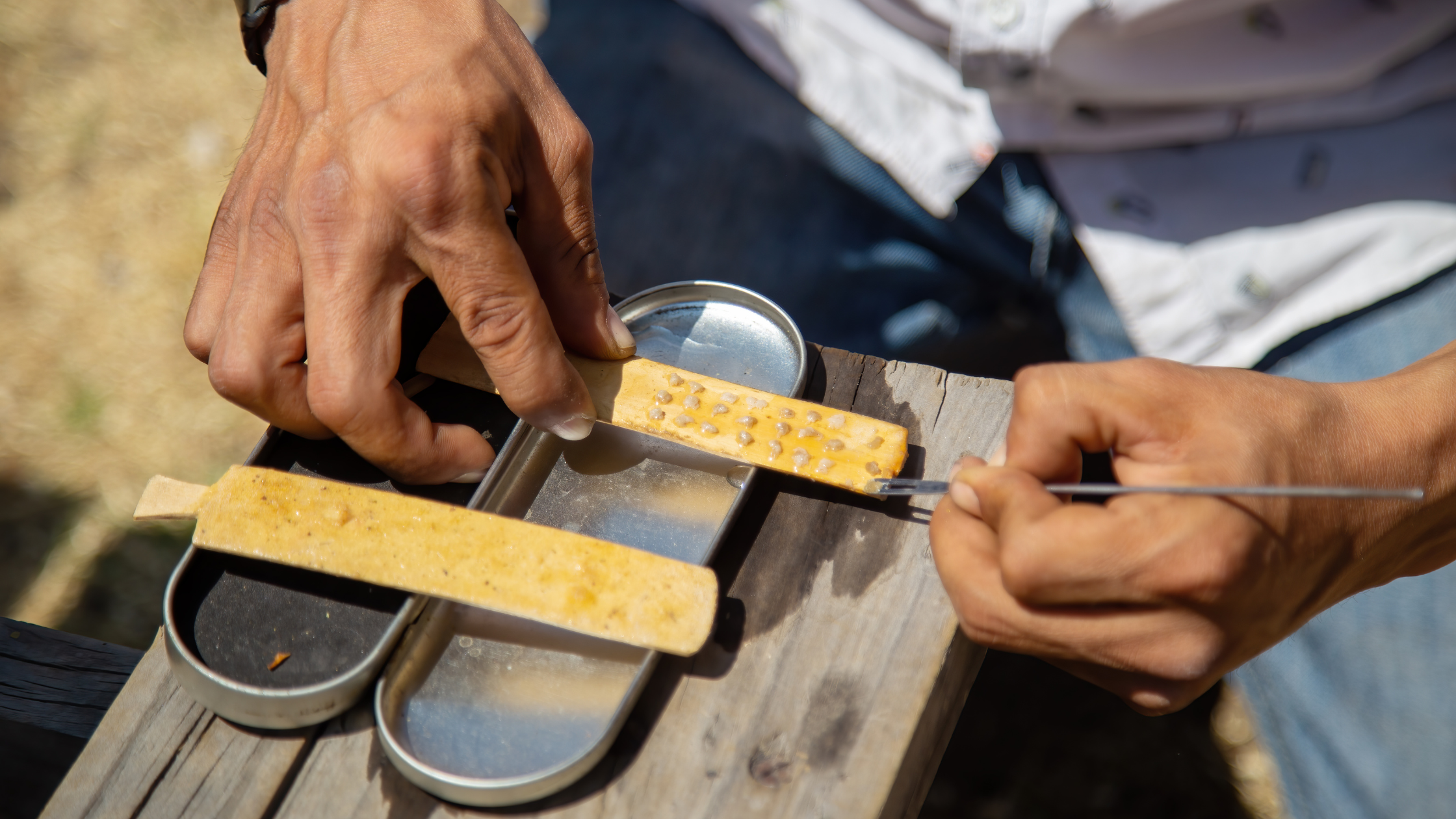
Kambo is a bioactive secretion from the Amazonian tree frog Phyllomedusa bicolor, and it is gaining serious attention in the natural fertility space. For women with low AMH, it addresses several of the underlying mechanisms that affect both egg quality and the broader hormonal environment.
Its bioactive peptides have documented anti-inflammatory effects, reducing the oxidative stress that damages developing follicles. They support deep cellular detoxification, clearing the systemic burden that affects hormonal function. And they reset the nervous system, addressing the chronic stress response that suppresses reproductive hormones and disrupts the follicular environment.
Claire Anstey, founder of The Kambo Fertility Clinic, has worked with many women with low AMH who went on to conceive naturally after completing the Fertility Boost Programme. The programme combines four Kambo sessions with hypnotherapy and subconscious healing work, addressing the physical and emotional dimensions of fertility together.
The 95% success rate reported by the programme includes women with low AMH diagnoses who had been told natural conception was unlikely.
What Kambo does not do is create new eggs. No treatment can. What it does is improve the conditions in which your existing eggs develop, mature, and have the best possible chance of fertilising and implanting successfully.
The Emotional Weight of a Low AMH Diagnosis and Why It Matters Clinically
Receiving a low AMH result is often a shock. It can trigger grief, urgency, and a persistent sense of running out of time. These emotional responses are entirely understandable.
They are also physiologically significant.
Chronic anxiety and grief elevate cortisol. Cortisol suppresses the hormones that support follicular development. The stress of a low AMH diagnosis can, if not addressed, actively worsen the fertility environment it is supposed to be informing you about.
This is not a reason to feel calm on demand. It is a reason to take the emotional and nervous system dimension of fertility as seriously as the nutritional and supplementation dimension.
Hypnotherapy, somatic bodywork, and programmes that combine physical and subconscious healing have shown meaningful results in improving the hormonal environment and, in some cases, in supporting AMH levels themselves. The body's hormonal systems are responsive. They are not fixed.
Practical Steps for Women With Low AMH Who Want to Conceive Naturally
If you have received a low AMH diagnosis and you want to pursue natural conception, here is a clear starting framework.
Get a complete picture first. AMH is one marker. Ask for a full antral follicle count via ultrasound, full thyroid panel, vitamin D, inflammatory markers, and day 3 FSH and oestradiol. These together give a much richer view of your fertility landscape than AMH alone.
Start CoQ10 immediately. In ubiquinol form, 400 to 600mg daily. Egg maturation takes around 90 days, so the sooner you start, the sooner the benefit reaches the developing follicles.
Address your diet with intention. Remove processed foods, alcohol, and sugar. Add oily fish, leafy greens, nuts, seeds, and a high-quality prenatal supplement with methylfolate. This is not a temporary measure. It is the foundation.
Reduce your environmental toxic load. Switch to glass or stainless steel where possible, choose natural cleaning and beauty products, and buy organic for the foods with the highest pesticide residues.
Address stress as a clinical priority. Not a lifestyle nicety. Explore hypnotherapy, breathwork, or a programme that addresses the nervous system and subconscious directly.
Consider the Fertility Boost Programme. If you want a structured, specialist approach that addresses the physical, hormonal, emotional, and energetic dimensions of low AMH fertility together, this programme was built for exactly this situation.
Low AMH Is a Prompt to Act, Not a Sentence
A low AMH result means your body is telling you something. It is asking for support, for better conditions, for a reduction in the inputs that are working against it. It is not telling you that conception is out of reach.
The women who go on to conceive naturally with low AMH are not lucky. They are the ones who took the diagnosis seriously enough to address the conditions that influence egg quality, hormonal health, and the broader fertility environment.
Natural fertility treatment for low AMH is not about ignoring the number. It is about making it less relevant by improving everything around it.
If you are ready to explore what that looks like for you, the conversation starts here.
Find out more about the Fertility Boost Programme at The Kambo Clinic