How to Conceive Naturally Without IVF: What Your Doctor Has Not Told You
You've been trying. You've had the tests. And at some point, a doctor handed you a leaflet about IVF and made it feel like the only road forward.
But it isn't.
Thousands of women conceive naturally without IVF every year, including women who were told their chances were slim, women with low AMH, unexplained infertility, endometriosis, and women over 40. The difference between them and those who never tried another path often comes down to one thing: they found a treatment approach that worked with their body, not just around it.
This article lays out what that looks like, what the research supports, and why natural fertility treatment deserves serious consideration before, or alongside, any medical intervention.
Why So Many Women Are Looking Beyond IVF
IVF success rates are not what the brochures suggest. According to the HFEA, the average live birth rate per IVF cycle in the UK is around 32% for women under 35, and it drops sharply with age. For women over 40, it falls to under 10% per cycle.
That is not a criticism of IVF. For many people, it is the right route. But it does mean that pursuing natural conception is far from giving up. In many cases, it is the smarter first step.
There is also the emotional cost. IVF is physically demanding, hormonally intense, and at £5,000 to £8,000 per cycle, financially significant. Many women go through multiple rounds before a successful pregnancy. Some never get there.
If your body has not yet been given the right conditions to conceive, the question is worth asking: what is getting in the way, and can it be addressed naturally?
What "Natural Fertility Treatment" Actually Means
Natural fertility treatment is not wishful thinking. It is a category of evidence-informed approaches that address the underlying physical, hormonal, and in some models emotional, causes of fertility challenges.
It includes things like:
Targeted nutritional support and lifestyle changes
Acupuncture and traditional Chinese medicine
Hypnotherapy and mind-body approaches
Kambo, an Amazonian bioactive medicine gaining significant attention in the fertility space
Stress regulation and nervous system support
The goal of all of these is the same: to bring the body into the best possible state for conception. Not to override biology, but to support it.
Some of these approaches have strong clinical research behind them. Others have decades of practitioner evidence and growing scientific interest. None of them require a waiting list.
The Role of Stress in Infertility and Why It Is Underestimated
One of the most consistently overlooked factors in fertility is the stress response.
When the body is under chronic stress, whether from work, grief, relationship pressure, or the relentless cycle of trying and not conceiving, it produces elevated cortisol. Cortisol suppresses the reproductive hormones needed for ovulation, implantation, and early pregnancy. It is not a character flaw. It is physiology.
Research published in Human Reproduction found that women with high levels of alpha-amylase (a stress biomarker) took 29% longer to conceive and had twice the risk of infertility compared to women with lower levels.
Addressing the stress response is not a soft option. It is a clinical one.
Approaches that regulate the nervous system, including hypnotherapy, breathwork, and certain bioactive treatments, have shown meaningful effects on cortisol, reproductive hormone levels, and fertility outcomes. This is worth taking seriously, especially for women with unexplained infertility where no structural cause has been found.
Unexplained Infertility: When the Tests Show Nothing
"Unexplained infertility" affects around 25% of couples struggling to conceive. It means the standard tests have come back normal, and yet pregnancy isn't happening.
This is one of the most frustrating diagnoses to receive. It can feel like being told: we don't know what's wrong, so here's IVF.
But unexplained infertility is not the same as "nothing is wrong." It means the cause has not been found, not that one doesn't exist. Subclinical inflammation, immune system responses, mitochondrial function, and emotional or energetic blocks are not routinely tested for. They can all affect conception.
Women with unexplained infertility are often excellent candidates for natural fertility treatment, precisely because there is no structural barrier. The body is capable. It needs the right conditions.
Claire Anstey, founder of The Kambo Fertility Clinic and one of the UK's leading Kambo fertility specialists, has worked with many women in exactly this position. Women who had been told there was no reason they couldn't conceive, and yet weren't. Her 4-session Fertility Boost Programme combines Kambo with hypnotherapy and subconscious healing, specifically designed to remove the physical, emotional, and energetic obstacles that standard tests don't measure.
The programme reports a 95% success rate. That figure is unusual in any fertility context, natural or medical.
What Is Kambo and Why Is It Appearing in Fertility Conversations?
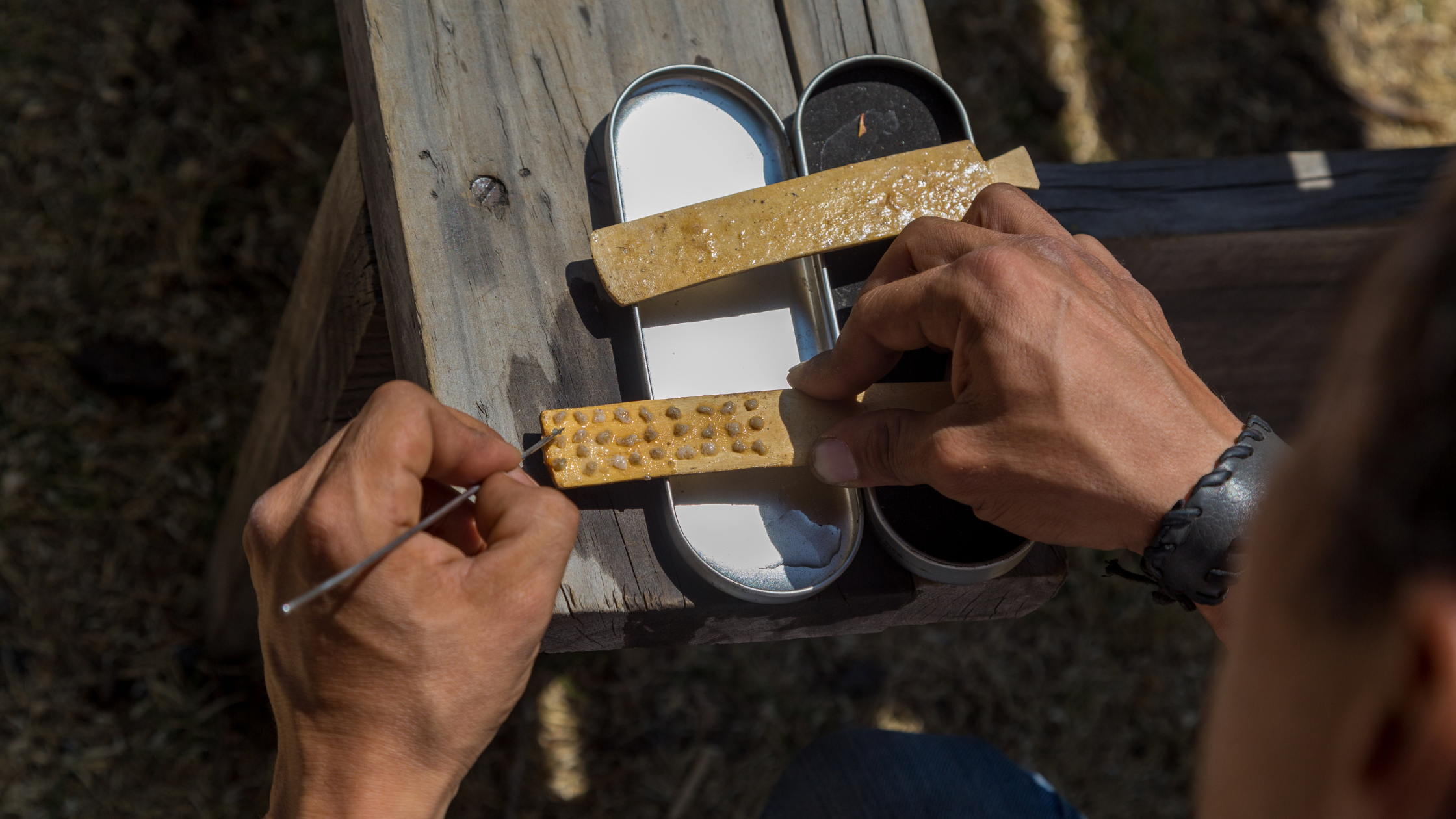
Kambo is a bioactive secretion from the Amazonian tree frog Phyllomedusa bicolor. It has been used for centuries by indigenous communities in the Amazon as a cleansing and strengthening medicine. In the last decade, it has attracted serious scientific interest for its peptide content.
The secretion contains a range of bioactive peptides, including phyllokinin, phyllomedusin, dermorphin, and deltorphin, each of which has measurable effects on the body. These include:
Anti-inflammatory action, reducing systemic inflammation that can impair implantation
Hormonal recalibration, supporting the body's own regulatory systems
Deep cellular detoxification, clearing the physical terrain for conception
Nervous system reset, addressing the chronic stress response at a physiological level
For women with conditions like endometriosis, PCOS, low AMH, or blocked fallopian tubes, the anti-inflammatory and hormonal effects are particularly relevant. For women with unexplained infertility, the nervous system and subconscious elements of the programme often prove to be the missing piece.
Kambo is not a drug. It does not force hormonal changes; it supports the body's own intelligence. That distinction matters.
Natural Fertility Treatment for Specific Conditions
Low AMH
AMH (anti-Müllerian hormone) is used as a marker of ovarian reserve. Low AMH is often presented as a fixed ceiling on your chances. But AMH is a snapshot, not a sentence. Egg quality, uterine environment, hormonal balance, and stress levels all play a role that AMH alone cannot measure.
Women with low AMH have conceived naturally, and many have done so after improving the broader conditions for conception. Natural fertility treatment focuses on exactly that: the environment, not just the number.
Endometriosis
Endometriosis affects around 1 in 10 women and is a significant cause of fertility challenges. The inflammation associated with endometriosis can disrupt implantation and egg quality. Anti-inflammatory approaches, including dietary changes, specific supplementation, and treatments like Kambo, address this at the root rather than simply managing symptoms.
PCOS
Polycystic ovary syndrome affects ovulation and hormonal balance. Insulin resistance, inflammation, and stress all drive PCOS symptoms. Natural approaches that regulate these systems, including nutritional therapy, acupuncture, and bioactive treatments, can restore more regular ovulation and improve fertility outcomes meaningfully.
Over 40
Age is a factor. It is also not the full story. Women over 40 conceive naturally every day. The focus shifts to egg quality, uterine health, and systemic vitality, all of which respond to the right support. Waiting for IVF is not always the best use of time. Investing it in natural preparation often is.
How to Start: Practical Steps Towards Natural Conception
If you want to improve your chances of conceiving naturally, here is where to begin.
1. Get the full picture. Standard fertility tests cover the basics. Ask about thyroid function, vitamin D, inflammatory markers, and AMH if you haven't already. Knowledge is the starting point.
2. Address nutrition and inflammation. A diet high in processed foods, sugar, and alcohol creates systemic inflammation. A whole-food, anti-inflammatory diet, rich in omega-3s, antioxidants, and folate, creates a better environment for conception. This is not controversial. It is foundational.
3. Take your stress response seriously. If you are in a cycle of anxiety, grief, or chronic trying-and-failing, your nervous system needs support. This might be therapy, hypnotherapy, breathwork, or a more structured programme. Don't treat it as secondary.
4. Explore specialist natural fertility treatment. Not all practitioners are equal. Look for someone with specific training in fertility, a clear methodology, and verifiable outcomes. Ask about their approach to your specific diagnosis, or lack of one.
5. Consider Kambo. If you are open to bioactive approaches and want something that works on multiple levels, physical, hormonal, and emotional, the Kambo Fertility Programme is worth understanding properly. Start by reading what it involves and why it works.
You Have More Options Than You Have Been Told
The fertility conversation in the UK defaults too quickly to IVF. It is not the only option, it is not always the right first option, and for many women it is not where the story should start.
Natural fertility treatment, done properly with clinical rigour and specialist expertise, gives many women something that IVF alone cannot: a body prepared to conceive, not just stimulated to produce eggs.
The 95% success rate of The Kambo Fertility Programme is not magic. It is the result of working with the body on every level it needs, physical, hormonal, emotional, and energetic, and removing the barriers that standard medicine doesn't always see.
If you are ready to explore what natural conception could look like for you, the next step is a conversation.