Preparing for IVF Naturally: How to Give Your Cycle the Best Chance
Most IVF conversations focus on the clinical protocol: the drugs, the scans, the egg retrieval, the embryo transfer. What happens in the weeks and months before you walk into the clinic rarely gets the same attention.
That is a missed opportunity. Because preparing for IVF naturally in the 90 days before your cycle can meaningfully improve the quality of the eggs retrieved, the receptivity of the uterine lining, and the likelihood that a transferred embryo will implant and develop into a healthy pregnancy.
IVF is a significant physical, emotional, and financial investment. The preparation you do beforehand is not separate from the treatment. It is part of it.
Why the 90 Days Before IVF Matter More Than Most Clinics Tell You
Follicles, the fluid-filled sacs that contain your eggs, take approximately 90 days to develop from their earliest stage to the mature egg that will be retrieved during an IVF cycle. During this entire 90-day window, the environment in which those follicles develop directly influences the quality of the egg they produce.
This means the nutrition you eat today, the stress you carry this month, the inflammation in your body right now, are all shaping the eggs that will be retrieved in your upcoming IVF cycle.
IVF stimulates the follicles that are already in development. It cannot improve the quality of eggs that developed in a depleted or inflamed environment. The clinic can retrieve more eggs with stimulation drugs, but if the eggs retrieved are poor quality due to mitochondrial dysfunction or oxidative damage, the stimulation will not change that.
What you do in the 90 days before your cycle determines what IVF has to work with.
This is not a criticism of IVF clinics. It is information they often do not have the time or the remit to deliver. But it is information that could change your outcome.
The Science Behind Natural IVF Preparation
The research on pre-IVF preparation is growing and the findings are consistent: women who enter IVF cycles in better physical condition, with higher antioxidant status, lower inflammatory markers, and better mitochondrial function in their eggs, have better outcomes.
A study published in Reproductive Biology and Endocrinology found that CoQ10 supplementation before IVF improved ovarian response and embryo quality in women with poor ovarian reserve. Another study showed that women with higher omega-3 levels at the time of egg retrieval had significantly higher fertilisation rates and better quality embryos.
Vitamin D deficiency is associated with lower clinical pregnancy rates and live birth rates in IVF. Stress levels at the time of embryo transfer have been shown to affect implantation success. Uterine blood flow at the time of transfer is a predictor of implantation.
Each of these factors is modifiable. None of them requires a prescription.
Egg Quality: The Foundation of IVF Success
Every IVF clinic measures egg quantity. The stimulation drugs are designed to retrieve as many eggs as possible in a single cycle. But quantity without quality rarely produces the outcome you are hoping for.
Egg quality is determined primarily by mitochondrial function. The mitochondria inside an egg power the energy-intensive processes of fertilisation and the first cell divisions of the embryo. When mitochondrial function is compromised, fertilisation may fail, or the embryo may arrest at an early stage before transfer is possible.
CoQ10: Start at Least 90 Days Before Your Cycle
CoQ10 in ubiquinol form, taken at 400 to 600mg daily, supports mitochondrial function in developing follicles. The research on CoQ10 and IVF outcomes is consistent: improvements in egg quality, fertilisation rates, and embryo development, particularly in women over 35 or with diminished ovarian reserve.
It needs to be started at least 90 days before egg retrieval to reach the follicles currently in development. Starting earlier is better.
Antioxidant Nutrition
Oxidative stress damages eggs directly. An antioxidant-rich diet, built around colourful vegetables, berries, nuts, seeds, oily fish, and olive oil, reduces oxidative damage to developing follicles. Alcohol, processed foods, and sugar increase oxidative stress and are worth minimising in the pre-IVF period.
This is not about restriction for its own sake. It is about giving the eggs in development the cleanest possible cellular environment.
Uterine Receptivity: Preparing the Lining for Implantation
Egg quality determines whether fertilisation occurs and whether the embryo develops normally. Uterine receptivity determines whether that embryo implants successfully. Both matter equally for IVF success.
A healthy uterine lining needs good blood flow, adequate thickness, the right hormonal environment, and low levels of inflammation. Each of these can be supported naturally in the pre-IVF period.
Acupuncture for Uterine Blood Flow
Acupuncture has reasonable clinical evidence for improving blood flow to the uterus, which supports lining development and receptivity. Several studies have shown improvements in IVF outcomes when acupuncture is used in the weeks before and around embryo transfer.
Starting a course of acupuncture 6 to 8 weeks before your transfer date is a common approach among fertility specialists who work integratively.
Vitamin D and Uterine Function
Vitamin D receptors are present in the uterine lining and play a role in implantation. Women with sufficient vitamin D levels have consistently higher implantation and live birth rates in IVF studies. Testing your level and supplementing to reach optimal range (above 75 nmol/L) before your cycle is one of the most straightforward interventions available.
Reducing Inflammation
Chronic inflammation in the uterine environment can impair implantation even when the embryo is chromosomally normal. Anti-inflammatory nutrition, omega-3 supplementation, and addressing any underlying inflammatory conditions such as endometriosis, thyroid dysfunction, or gut dysbiosis, all contribute to a more receptive uterine environment.
Stress, the Nervous System, and IVF Outcomes
The emotional weight of an IVF cycle is significant. The injections, the scans, the waiting, the hope, and the fear are all physically taxing as well as emotionally exhausting. And the stress response this creates has measurable effects on outcomes.
Elevated cortisol at the time of embryo transfer is associated with lower implantation rates. The nervous system state during the IVF process is not a peripheral concern. It is a clinical one.
Preparing the nervous system before IVF begins is as important as preparing the body.
Hypnotherapy has good evidence for reducing anxiety in IVF patients and is associated with improved outcomes. Mind-body programmes specifically designed for IVF patients have shown meaningful improvements in clinical pregnancy rates. The mechanism is not mysterious: lower cortisol, better hormonal balance, improved uterine blood flow.
How Kambo Supports IVF Preparation
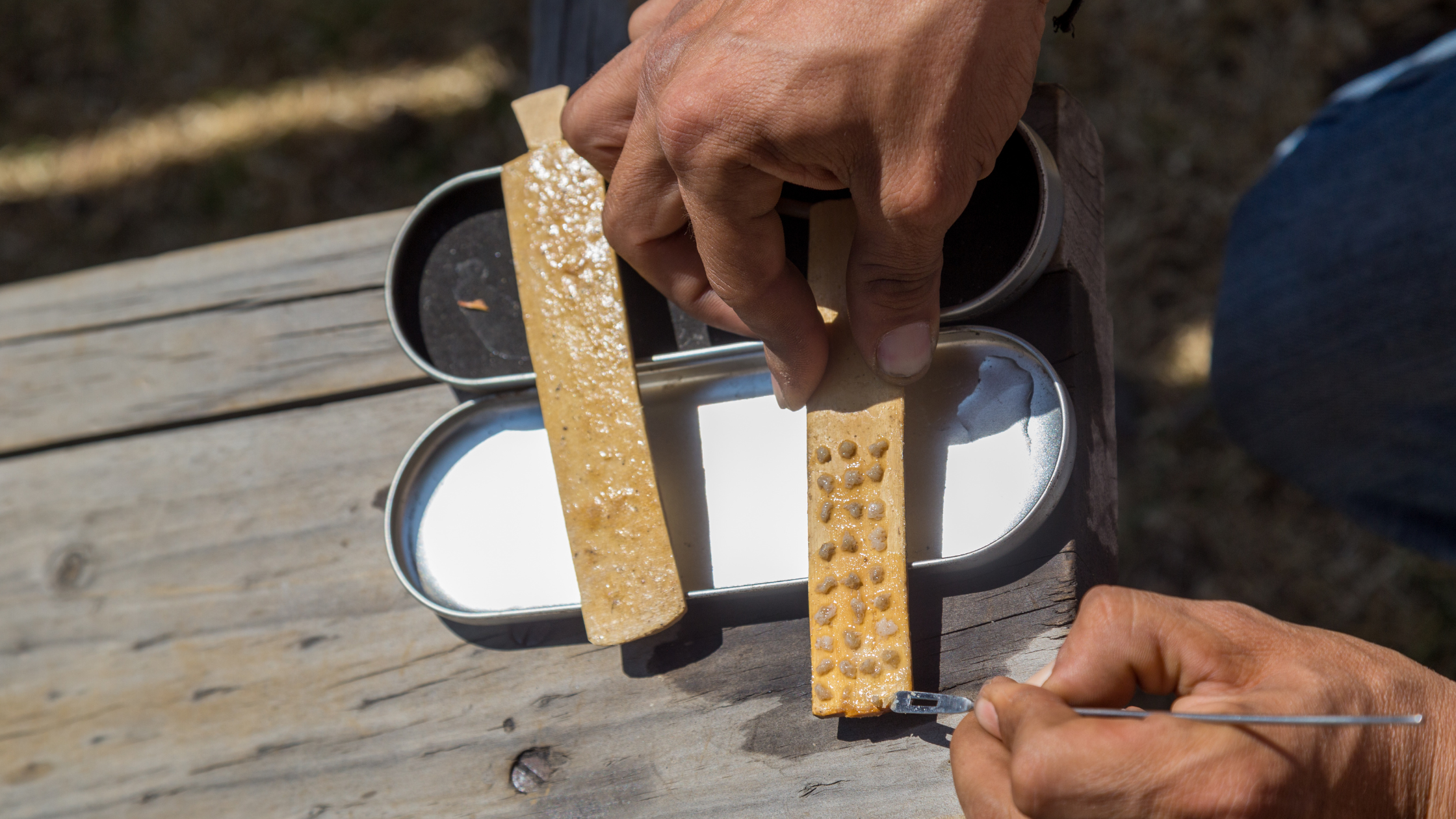
Kambo is a bioactive secretion from the Amazonian tree frog Phyllomedusa bicolor, and its multi-system action makes it a powerful tool in the pre-IVF preparation period.
Its peptide compounds reduce systemic inflammation, support deep cellular detoxification, recalibrate hormonal signalling, and reset the nervous system. For women preparing for IVF, particularly those with previous failed cycles, poor egg quality, or unexplained implantation failure, addressing all of these systems in the 90-day preparation window can fundamentally change what the IVF cycle has to work with.
Claire Anstey, founder of The Kambo Fertility Clinic, has worked with many women using the Fertility Boost Programme as pre-IVF preparation. Most went on to conceive naturally during the programme and never needed the IVF cycle they had planned. Others completed the programme and then went into IVF with significantly improved results compared to previous cycles.
The 4-session programme combines Kambo with Hypnotherapy and Subconscious Healing, creating a comprehensive preparation that addresses the physical, hormonal, and emotional conditions for IVF success.

A Complete Pre-IVF Natural Preparation Plan
If your IVF cycle is 3 months away or more, here is a structured framework for the preparation period.
Months 1 to 3 before egg retrievaL
Start CoQ10 in ubiquinol form at 400 to 600mg daily immediately. Add a high-quality prenatal supplement containing methylfolate. Test and optimise vitamin D. Begin an anti-inflammatory diet, removing alcohol, processed foods, and sugar. Add omega-3 supplementation at 1,000mg EPA and DHA daily. Reduce environmental oestrogen exposure where possible.
6 to 8 weeks before transfer:
Begin acupuncture with a practitioner experienced in fertility and IVF support. If you are not already doing so, address the nervous system directly with Hypnotherapy or a structured mind-body programme. Reduce intense physical exercise in favour of moderate, restorative movement.
In the final 2 weeks before transfer:
Prioritise sleep and nervous system regulation above all else. Reduce commitments where possible. Continue your supplement protocol. The embryo transfer is not the beginning of the process. It is the culmination of everything you have been building.
Throughout the preparation period:
Consider the Fertility Boost Programme if you want a specialist, comprehensive approach that addresses the physical and emotional dimensions of IVF preparation together. Particularly relevant if you have had a previous failed cycle or have been told your egg quality or uterine environment is a concern.
IVF Works Best When the Body Is Ready for It
IVF is a remarkable technology. It gives conception a chance when the biological process needs assistance. But it works within the constraints of the body it is working with.
Preparing for IVF naturally is not about hedging your bets or hedging against the treatment. It is about making the treatment as effective as possible by giving it the best possible biological material and environment to work with.
The 90 days before your cycle are not waiting time. They are preparation time. Use them well.
Find out more about the Fertility Boost Programme at The Kambo Clinic